


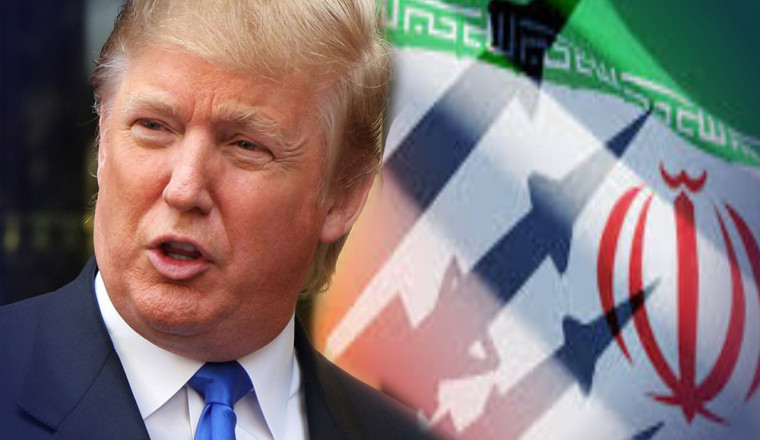
President Donald Trump announced Sunday that the United States and Iran have reached a tentative agreement aimed at ending the conflict between the two countries and reopening the Strait of Hormuz.
“The Deal with the Islamic Republic of Iran is now complete,” Trump said in a post on Truth Social. “Congratulations to all! I hereby fully authorize the toll free opening of the Strait of Hormuz, and, simultaneously herewith, authorize the immediate removal of the United States Naval blockade. Ships of the World, start your engines. Let the oil flow!”
Pakistani Prime Minister Shehbaz Sharif made a similar announcement shortly before Trump's statement.
“Following intensive talks, we are pleased to announce that the Peace Deal between the United States of America and Islamic Republic of Iran has been REACHED,” Sharif said on X. “Both sides have declared the immediate and permanent termination of military operations on all fronts, including in Lebanon.”
Sharif said a signing ceremony is scheduled for Friday in Switzerland, with "pre-implementation discussions" expected beforehand.
Iran's Supreme National Security Council confirmed the agreement through state-affiliated media, stating that all warfare between the parties would cease “immediately and permanently from tonight” and that the naval blockade would end. Iranian officials added that U.S. commitments under the memorandum must be fulfilled before negotiations on a final agreement begin.
It remains unclear when the Strait of Hormuz will fully reopen. Trump later said the waterway would open “upon the signing of the Deal on Friday, for purposes of mine removal.”
The agreement follows months of conflict between the United States, Israel and Iran. The war began on Feb. 28 and was marked by major military operations across the region. A temporary ceasefire was reached in April to allow negotiations, though sporadic attacks continued amid disagreements over the strategically important Strait of Hormuz, through which around 20% of global oil supplies passed before the conflict.
The deal is expected to have significant economic implications. Following the announcement, U.S. crude oil prices fell more than 4.5% to $80 per barrel, while Brent crude dropped about 4% to $83 per barrel. Despite the decline, oil prices remain substantially higher than they were before the conflict began.
Key Elements of the Agreement
According to Iranian state-affiliated Mehr News, the draft memorandum contains 14 points and includes an end to the war, including fighting in Lebanon, and the withdrawal of U.S. forces positioned around Iran.
The memorandum reportedly reaffirms Iran's commitment to the Nuclear Non-Proliferation Treaty and its pledge not to pursue nuclear weapons. It also includes provisions for easing certain oil and financial sanctions on Iran and outlines reconstruction efforts supported by the United States and its allies.
A 60-day negotiation period is expected to follow, focusing on sanctions, nuclear activities, and international resolutions concerning Iran. The agreement also reportedly includes plans to release billions of dollars in frozen Iranian assets.
According to Mehr News, the final agreement will focus primarily on nuclear enrichment, sanctions relief, and postwar reconstruction, while excluding discussions about Iran's missile program and its support for regional armed groups.
Signing Ceremony Plans
Trump told The Wall Street Journal that the agreement could be signed electronically or by Vice President JD Vance in person.
Vance said Sunday that details of the ceremony are still being finalized.
“I certainly plan to be there, but it’s possible the president himself could be there,” Vance said on Fox News.
He described the agreement as a major breakthrough.
“I’m not going to say that everybody is going to sing Kumbaya tomorrow. It’s going to take a little bit of time to learn the ways of peace, but I do think we took a major, major step tonight,” Vance said.
Uncertainty Over Israel and Lebanon
Questions remain about how Israel will respond moving forward. The agreement was finalized despite an Israeli strike on Lebanon on Sunday that drew criticism from both Iran and Trump.
Earlier in the day, Trump posted on Truth Social that the strikes on Beirut “should not have happened, particularly on a special day when we are so close to a Peace Deal with Iran.”
“All sides should stand down,” he said. “There should be no more attacks by Israel anywhere in Lebanon.”
Israeli officials have indicated that military operations in designated security zones across Lebanon, Gaza and Syria will continue, while warning that any future Iranian attacks would be met with retaliation.
Global Reaction
World leaders broadly welcomed the agreement and expressed hope that it would bring stability to the region.
“I sincerely hope that this news, which the entire world has long needed, will pave the way for the establishment of a lasting environment of peace and security in our region,” Turkish President Recep Tayyip Erdogan said on X.
United Nations Secretary-General António Guterres described the agreement as a major step toward ending the conflict.
“This represents a critical step towards the peaceful settlement of the conflict,” he said.
Qatar, the United Kingdom, France and other nations also welcomed the breakthrough, emphasizing the importance of restoring maritime traffic through the Strait of Hormuz.
French President Emmanuel Macron said: “The resumption of maritime traffic, without restrictions or tolls, is an essential condition for regional stability and the global economy.”
The conflict has taken a heavy human toll. Human rights groups estimate that thousands have been killed across Iran, Lebanon, Israel and neighboring regions since fighting erupted earlier this year.
While many details of the agreement remain unresolved, the announcement marks the most significant diplomatic breakthrough since the conflict began and could pave the way for a broader settlement in the months ahead.






Comments
0 comment