


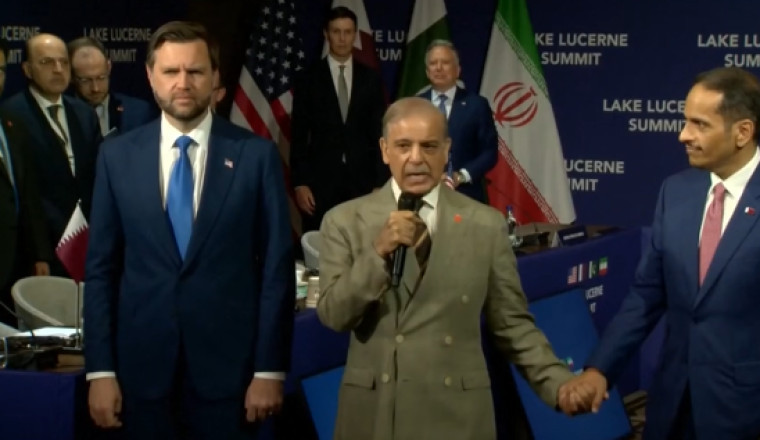
In a significant diplomatic breakthrough, the first round of negotiations between the United States and Iran has wrapped up in Switzerland, showcasing "encouraging progress," as proclaimed by mediators from Qatar and Pakistan. The talks, which commenced on Sunday, followed a preliminary agreement reached between the two nations the previous week, setting the stage for a potential resolution to the ongoing conflict.
In a joint statement released early Monday, the mediators revealed that a "High Level Committee" had established a comprehensive roadmap aimed at achieving a final agreement within the next two months. Iranian Foreign Minister Seyed Abbas Araghchi characterized the discussions as having "delivered major progress" toward alleviating the conflict in Lebanon.
The memorandum of understanding signed last week outlines several pivotal commitments: reaching a final deal within 60 days, ceasing hostilities on "all fronts," including the ongoing strife in Lebanon, and reopening the crucial Strait of Hormuz. This strategic waterway is vital for global trade, facilitating the passage of approximately 20% of the world's oil and natural gas.
To enhance communication and prevent misunderstandings, the mediators announced the establishment of a "communication line" designed to ensure safe passage for commercial vessels through the Strait of Hormuz. Additionally, the US, Iran, and Lebanon have agreed to form a "de-confliction cell," coordinated by Qatar and Pakistan, to facilitate an end to military operations in Lebanon.
These negotiations occur against a backdrop of escalating violence in southern Lebanon, where clashes between Hezbollah and Israeli forces have intensified, despite prior agreements. Recent Israeli airstrikes have resulted in significant casualties among the Lebanese population, including women and children, while Hezbollah's retaliatory attacks have claimed the lives of Israeli soldiers.
In response to the escalating conflict, the US announced a new ceasefire between Israel and Hezbollah on Friday. Iran subsequently declared the closure of the Strait of Hormuz, although shipping data indicated that some vessels continued to navigate the key waterway.
Before the commencement of the talks in Switzerland, US President Donald Trump issued a stern warning, demanding that Iran "immediately stop their highly paid PROXIES in Lebanon from causing trouble." He also threatened to "hit Iran very hard again" if they failed to comply. In a pointed rebuttal, Iran’s lead negotiator Mohammad Bagher Ghalibaf remarked, "Don't they think that if their threats had any effect, they wouldn't be in this desperate situation today?... No matter how much they talk, it is we who take action."
Leading the American delegation, US Vice-President JD Vance, alongside Jared Kushner and special envoy Steve Witkoff, conveyed Trump's directive to "turn over a new leaf" in US-Iran relations. Vance expressed that if Iran were willing to abandon its role as a "driver of regional instability" and renounce its "nuclear weapons ambitions for the longer term," the US would be open to "fundamentally transforming" its relationship with Tehran. Iran has consistently maintained that its nuclear program is intended for peaceful purposes.
The initial agreement includes provisions for Iran to reopen the Strait of Hormuz, as well as a proposed $300 billion reconstruction plan for the nation and a US commitment to lifting sanctions. However, the contentious issue of Iran's nuclear program remains a significant hurdle in the negotiations.
The Israeli government has emphasized that its conflict with Hezbollah is distinct from the broader confrontation with Iran. Since the onset of intensified fighting in early March, Lebanon's health ministry reports that over 4,000 individuals have lost their lives, while Israeli authorities confirm that at least 34 soldiers and four civilians have been killed.
As the negotiations progress, the world watches closely, hopeful that these diplomatic efforts will pave the way for lasting peace and stability in the region.








Comments
0 comment