


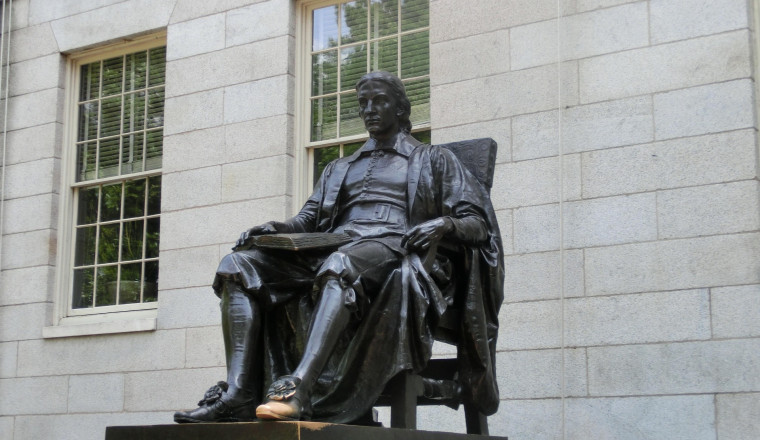
A recent global ranking released by Leiden University in the Netherlands — which evaluates the quantity and significance of research publications — has placed Harvard in third position globally, with both leading institutions being Chinese. The situation is even more dire for the United States: within the top 20, only Harvard and the University of Michigan represent U.S. universities. China occupies 16 of the top 20 positions. Unlike many university rankings that focus on reputation, this particular ranking is grounded in statistical analysis derived from publication data. Essentially, it serves as a metric for assessing what a research university is fundamentally expected to achieve: generating substantial scholarly work. Therefore, if the most renowned university globally is experiencing a decline — and if China is asserting its dominance at the top — it is time to move beyond vague discussions of "globalization" and critically examine what has truly gone awry in American higher education.
The explanation isn't that Americans have suddenly become less intelligent. Rather, it's that our universities have lost their seriousness. In recent years, the focus on many campuses has shifted from the pursuit of truth, merit, and education to an emphasis on DEI, identity, and activism. This shift is evident in all critical areas of research production: hiring practices, teaching methods, and the fundamental culture of inquiry. Hiring processes now increasingly favor ideological conformity over intellectual merit. The use of diversity statements and 'commitment' tests has become commonplace. Entire hiring searches are structured to limit the range of acceptable viewpoints and methodologies. When a university opts to hire activists with PhDs instead of scholars with diverse opinions, it should not be surprised when the quality of scholarship declines.
Teaching has, in far too many instances, been diminished to mere therapeutic affirmation and political mobilization. Students are receiving more indoctrination than actual instruction, resulting in graduates who lack the essential writing, numeracy, and disciplinary rigor necessary to drive the next wave of research and innovation. The culture of research has turned timid and conformist. Entire categories of inquiries are deemed morally unacceptable to even consider. However, genuine research demands risk: challenging assumptions, questioning sacred beliefs, and pursuing evidence wherever it may lead. A campus that punishes dissent will ultimately stifle discovery. Overarching all of this is the rise of the diversicratic state: offices, training sessions, compliance systems, 'bias response' mechanisms, and an unending paper trail that drains resources and time. Universities may label it 'inclusion' as much as they like; in reality, it represents overhead, which is detrimental to productivity.
In contrast, China has been developing its research capacity as a state initiative — and indeed, it is one. It invests in laboratories, expands programs, attracts talent, and evaluates success based on outputs that convert into technological and geopolitical strength. Even a decade ago, this disparity was glaring. In the 2015 Leiden rankings, U.S. institutions were at the forefront of the top 20, with MIT, Harvard, and Caltech leading the pack. This isn't ancient history; it falls within the professional lifetimes of nearly all current university administrators. Simultaneously, institutional leaders who preach to Americans about "democracy" have shown a concerning nonchalance towards foreign funding, which often comes with conditions attached. The federal government has had to conduct multiple investigations into universities for not disclosing foreign donations and contracts. For instance, in 2020, the Department of Education looked into Harvard and Yale for potentially failing to report significant amounts of foreign funding; records from the DoE revealed billions in foreign contributions from nations such as Qatar and China.
Last April, an executive order aimed at addressing foreign influence highlighted that DoE investigations prompted universities to reveal $6.5 billion in foreign funds that had previously gone unreported. Moreover, it’s not solely about the money. U.S. law enforcement and congressional investigators have been sounding alarms for years regarding initiatives aimed at taking advantage of America’s open research landscape. The FBI has characterized Chinese "talent plans" as frequently encouraging one-way transfers of research and intellectual property, sometimes through undisclosed partnerships and contracts. A Senate inquiry similarly outlined how China’s talent recruitment initiatives were crafted to extract research and knowledge from the United States to further China’s national objectives. The crux of the matter is clear: America’s universities are losing ground internationally while being undermined domestically.









Comments
0 comment