


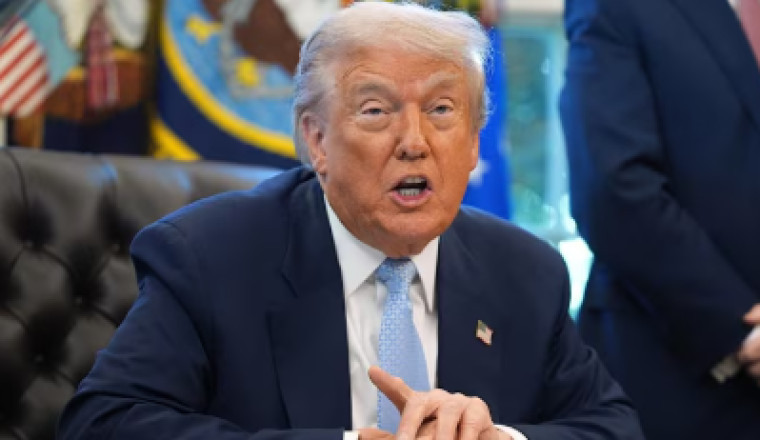
The US Supreme Court has struck down President Donald Trump's executive order seeking to limit birthright citizenship, delivering one of the most significant legal defeats of his presidency and reaffirming a constitutional principle that has stood for more than 150 years.
In a 6-3 ruling, the justices upheld the long-established precedent that children born on US soil automatically become American citizens, regardless of their parents' immigration status. The decision effectively ends Trump's effort to restrict birthright citizenship through executive action.
Trump had previously signed an executive order aimed at ending automatic citizenship for babies born in the United States to parents who are in the country illegally or who are in the country on temporary visas. The court ruled that the order was unconstitutional.
Reacting to the decision on social media, Trump called the ruling "too bad for our country" and argued that Congress could still pass legislation to end birthright citizenship. However, legal experts say the Constitution, specifically the 14th Amendment, guarantees the right, making any attempt to overturn it through ordinary legislation highly unlikely to succeed.
The ruling is widely seen as the final legal word on Trump's executive order, leaving little room for the administration to pursue the policy further without a constitutional amendment.
The birthright citizenship case was one of several major decisions handed down by the Supreme Court during the close of its 2025-2026 term.
Earlier this year, the court voted 6-3 to strike down most of Trump's global tariffs, dealing a major blow to his trade agenda. The justices also overturned Colorado's ban on conversion therapy and limited the ability of states to consider race when drawing electoral maps, a decision expected to influence congressional districts ahead of the November midterm elections.
Just a day before the birthright citizenship ruling, the court blocked Trump's attempt to immediately dismiss Federal Reserve Governor Lisa Cook, finding she had not been given due process to respond to allegations against her.
The court has, however, also delivered several victories for the Trump administration. It allowed the government to end Temporary Protected Status for Haitians and Syrians living in the United States and ruled that the president could remove officials from certain independent federal agencies.
In additional rulings released alongside the birthright citizenship decision, the Supreme Court ruled that states may ban transgender athletes from competing in girls' and women's school sports. The justices also struck down restrictions on how campaign spending can be coordinated, a decision expected to have implications for future elections.
With the court firmly rejecting Trump's executive order, the constitutional guarantee of birthright citizenship remains intact, preserving a legal precedent that has defined American citizenship for generations.










Comments
0 comment