


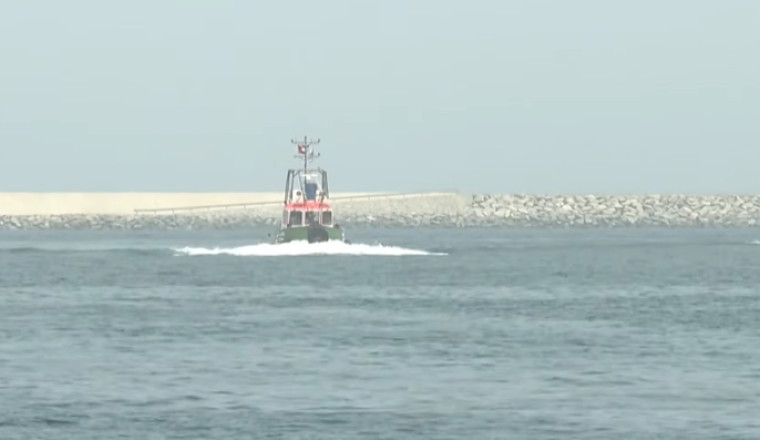
The United States launched military strikes against Iranian targets on Friday after a commercial cargo ship was attacked in the Strait of Hormuz, escalating tensions despite a recently announced ceasefire between the two countries.
President Donald Trump accused Iran of committing a "foolish violation" of the truce, while US Central Command (CENTCOM) said the strikes targeted missile and drone storage facilities as well as coastal radar sites.
According to CENTCOM, the operation was carried out in response to Thursday's drone attack on a cargo vessel, which forced the suspension of an international evacuation plan for thousands of sailors stranded in the region.
"The unwarranted aggression against commercial shipping by Iranian forces clearly violated the ceasefire," CENTCOM said in a statement.
"Furthermore, Iran's dangerous behavior undermined freedom of navigation as commerce increasingly flows through the vital international trade corridor."
The military added that it would continue coordinating safe passage for commercial vessels traveling through the Strait of Hormuz.
Iran rejected the US accusations, saying the cargo ship had been traveling through an unauthorized route.
The Islamic Revolutionary Guard Corps (IRGC) condemned the US strikes, accusing Washington of launching attacks "under various pretexts" and claiming its naval forces had retaliated against US military positions in the region. The IRGC did not provide details of the alleged response.
"If the aggression is repeated, our response will be more extensive than this," the IRGC warned.
The latest confrontation follows weeks of heightened tensions in the Gulf. Iran had previously restricted access through the Strait of Hormuz after fighting with the United States and Israel earlier this year, disrupting one of the world's busiest energy shipping routes and driving up global oil prices.
On June 17, Washington and Tehran agreed to a 14-point memorandum of understanding aimed at ending hostilities. The agreement included a commitment by Iran to make its "best efforts" to ensure the safe passage of commercial vessels through the strategic waterway for 60 days.
Following Friday's strikes, Vice President JD Vance said any disagreements over the agreement should be resolved through diplomacy.
"If Iran has disagreements about how the MOU is being applied, they can pick up the phone," Vance wrote on X. "But violence will be met with violence."
Iranian lawmaker Ebrahim Azizi, who chairs Parliament's National Security Commission, accused the United States of violating the ceasefire.
"This reckless violation of the ceasefire will, as always, lead to retreat and regret on their part," Azizi wrote on social media.
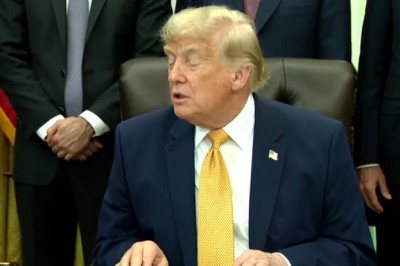
Speaking at the White House before the strikes were confirmed, Trump criticized the attack on the cargo ship but declined to discuss how the United States might respond.
"You'll find out," Trump told reporters. "I don't like the fact that they took a shot yesterday. They shouldn't be doing that."
The cargo vessel involved in Thursday's incident was identified as the Ever Lovely, a Singapore-flagged ship. British maritime authorities said it was struck by a projectile southeast of Oman's Port of Dahit while following a recommended transit route through the Strait of Hormuz.
The ship's owner, Evergreen, said the vessel remained operational and confirmed that all crew members were safe.
Following the attack, the International Maritime Organization paused its planned evacuation of more than 11,000 sailors who have remained stranded in the region since the conflict began.







Comments
0 comment