


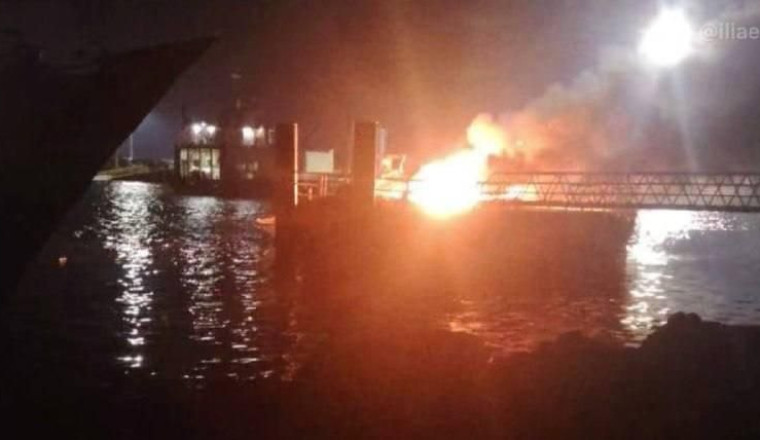
The United States and Iran have exchanged fresh accusations of violating their ceasefire agreement after a new wave of military action and sanctions threatened to derail ongoing peace efforts.
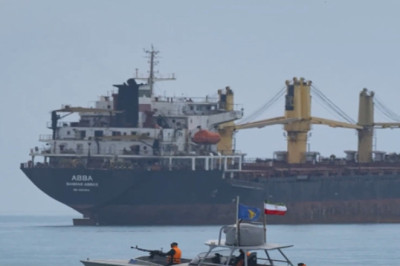
The US military said it carried out strikes on more than 80 targets in the early hours of Wednesday, targeting Iranian weapon launch sites, air defence systems and coastal surveillance facilities around the Strait of Hormuz. According to US Central Command, the operation was launched in response to Iranian attacks on three commercial vessels transiting the strategic waterway on Tuesday.
US officials described Iran's actions as an unprovoked breach of the ceasefire, saying the attacks endangered civilian shipping, including a Qatari liquefied natural gas tanker.
Iran responded by launching missile and drone attacks on US military sites in Bahrain and Kuwait. The Islamic Revolutionary Guards Corps claimed to have targeted 85 military facilities. Air raid sirens sounded in both countries, while Kuwaiti authorities said air defence systems intercepted incoming threats. There were no immediate reports of damage.
The latest escalation comes despite a ceasefire that took effect in April and a memorandum of understanding signed last month, which began a 60-day negotiation period aimed at resolving disputes over Iran's nuclear programme and securing a permanent end to hostilities.
Iran's Foreign Ministry accused Washington of repeatedly violating the agreement and warned that it would take "decisive measures" in response. Tehran also criticised the United States for revoking a temporary waiver that had allowed Iran to resume oil exports.
The sanctions waiver was withdrawn on Tuesday after the attacks on commercial vessels in the Strait of Hormuz. The exemption had been introduced following the signing of the memorandum of understanding but faced criticism from opponents of the Trump administration's Iran policy, who argued it weakened US negotiating leverage.
According to the United Kingdom Maritime Trade Operations centre, one of the vessels struck on Tuesday was the Qatari tanker Al Rekayyat, which was sailing south through the Strait of Hormuz toward the Gulf of Oman.
Qatar, which has been mediating talks between Washington and Tehran, condemned the attack on the tanker. Foreign Ministry spokesperson Majed al-Ansari described it as "a serious and explicit violation" of international law and said Iran would be held fully responsible.
The dispute has also exposed differing interpretations of the memorandum of understanding. Iran argues that any plans to establish new shipping routes through the Strait of Hormuz require coordination with Oman under the agreement, while the United States has taken a different view.
Analysts say the agreement's vague language has fuelled repeated disagreements, increasing the risk of further violations despite the ongoing ceasefire.
The latest strikes also come during the funeral ceremonies for Iran's late Supreme Leader, Ayatollah Ali Khamenei, who was killed at the start of the conflict. Large crowds gathered in the holy city of Qom on Tuesday, with mourners carrying flags, banners and placards as ceremonies continued across the country.








Comments
0 comment